Sunday, September 2, 2012

The Last Mauser: The Yugoslavian M48

It's no secret that I'm a fan of Mauser rifles, and for good reason. Paul Mauser's designs were some of the most influential and lasting contributions to firearms development in the late 19th and early 20th century, and indeed, many of these contributions live on today in modern hunting and target rifles (like the Winchester Model 70). Millions of Mauser and Mauser pattern rifles (I'll explain the difference later) were produced, and to this day, you can bet that someone, somewhere has one of Paul Mauser's progeny in his hands, ready to do violence to those who would oppose him. I don't say this to glorify war, but merely to state a fact: Mauser rifles were and remain very effective weapons.


Thousands of Russian captured Mauser rifles in stacks during WWII, awaiting refurbishment.

The Mauser design reached its zenith in 1898 with the appropriately named Mauser Model 98. The new rifle was adopted as Germany's battle rifle, and variants of the '98 were sold to countries around the world. This design was a significant departure from the earlier 1893/1895 design I wrote about here. It had a new, stronger bolt with no less than three lugs that locked into the receiver at different points. As such, the '98 action could handle whatever cartridge you threw at it, and Paul Mauser provided that cartridge in the form of the 8 x 57mm Mauser. The grand daddy of modern cartridges, the 8mm Mauser pushed a heavier, larger diameter bullet at higher velocities than the 7mm Mauser used in the 1893 designed action. The cartridge was originally designed with a .318" diameter projectile; this was later changed to a .323" bullet which remains the current diameter to this day. The 8mm Mauser cartridge served admirably in two World Wars and was chambered in everything from bolt action rifles to crew-served machine guns. The Germans even used it in their fighter planes. The standard loading was a ~150 gr bullet at 2,900 fps, making it the most powerful battle rifle cartridge of its day.


A Gewehr 98 with bayonet and ammunition.

I mentioned earlier that there are Mauser rifles, and Mauser pattern rifles. Paul Mauser's first successful repeating bolt action rifle, the Model 1889, was oddly enough not adopted by the German military. Instead, it was Belgium who placed the first orders for the new rifle. Belgium also got the rights to manufacture the Model 1889 themselves, in their own country. This of course made sense for various reasons, not the least of which is that you don't want a powerful rival like Germany being the sole source of your military hardware. At any rate, this stipulation resulted in the creation of Belgium's state run firearms company, Fabrique Nationale d'Armes de Guerre, otherwise known as FN. FN had a long relationship with Mauser, and produced its own variants of Mauser designs for export around the world. I consider the rifles produced by FN and other manufacturers (licensed and unlicensed) to be Mauser pattern rifles, while the rifles produced in Germany by Ludwig Loewe and DWM (who both owned Mauser) are properly referred to as Mauser rifles. The difference amounts to little other than semantics in most cases, but there are some Mauser inspired designs that are unique to these licensees. The M24 was one such design.

Not to be confused with the M249 SAW, also a FN design. This picture is of a Soldier I served with in Iraq in 2004.

FN was a bit ahead of the curve on some things, and they made good use of their license to use Mauser actions. In 1924 FN released the appropriately named Model 24. The Kingdom of Yugoslavia purchased these rifles to equip its military. The M24 was based on the Mauser 1898 action, but it sported a barrel that was about 7" shorter than the Gewehr 98 rifle. Additionally, the action was shorter by about 1/4" of an inch. This took a total half inch of travel off of the bolt, which in theory meant that the action could be manipulated a bit faster. This shorter length action is known as the "intermediate length" receiver. The M24 was a beautifully built short rifle in its own right, a good 11 years before Germany would officially adopt the legendary K98k that was the mainstay battle rifle of the Wehrmacht in WWII. Some very nice variants of the the M24 were made, such as the so-called M24/30 Venezuelan contract rifles, one of which I am fortunate enough to own.


Top: My M48B Yugoslavian Mauser. Bottom: M24/30 Venezuelan Contract Mauser. Generally, the Venezuelan is worth about three times the Yugoslavian. I prefer the Venezuelan for its superior fit, finish, and 7mm Mauser chambering.

World War II was the bolt action rifle's last hurrah, and as the Cold War loomed, millions of Mauser and Mauser-pattern rifles sat in armories throughout Europe. Some stayed in storage, some were relegated to second and third line civil defense forces, and some were sold as surplus to poorer countries. By the 1950s, the major powers in Europe had fielded semiautomatic and select-fire weapons for their militaries. It looked as if the bolt-action was dead and gone, but there was some life in the old girl yet.

After the war, Yugoslavia went Red along with the rest of Eastern Europe, and the new Communist regime went about preparing itself for the inevitable WWIII. Bolt action rifles were better than nothing, and Yugoslavia wasn't exactly overflowing with cash, so the old M24s were arsenal refurbished, often given new barrels, and stamped with the new Yugoslavian crest. The "new" rifles are known as the M24/47, with the 47 indicating the year of the refurbishment program. Alongside the 24/47, Yugoslavia produced new rifles built on FN tooling. These new bolt action rifles are known as the M48. Yugoslavia made them from 1950 to the early 1960's, and mechanically they were the same as the 24/47. They did receive a couple of minor upgrades from the 24/47 that were inspired by the German K98k (of which the Yugos captured many and also refurbished). Like the K98k, the M48 featured a turned-down bolt which supposedly made it easier to manipulate from certain positions, as well as a new stock with a sling cutout instead of sling swivels.  A cup-style steel buttplate was also adopted. The M48 would accept the K98k sling and bayonet, but most other parts were incompatible as the M48 had an intermediate-length receiver, like the M24 before it. Most of the M48s that were made were put into storage soon after manufacture. I speculate that this is because the Yugos were fielding their variant of the semiautomatic SKS at about the same time. That's not to say that the M48 just collected dust: some saw combat during the recent unpleasantness in the late 20th century that saw the dissolution of Yugoslavia, indeed, variants of these with custom stock carvings are sought after by some collectors.

A Yugoslavian M48 with stock art. Soldiers do all kinds of things (ranging from constructive to disgusting) to stave off boredom during war.

Yugoslavia made at least three variants of the M48. The first rifles featured all-forged steel parts. To cut costs, the M48A was developed, which substituted stamped steel for the magazine floor plate. The M48B (which was still marked the M48A for some reason) featured more stamped parts, such as the magazine follower, trigger guard, trigger, and upper barrel band. A variant of the M48B known as the M48BO was also made, without crests or markings of any kind. Some speculate that these rifles were made with the intent to fulfill contracts to somewhat, er, unpopular nations, and the Yugos wanted to retain a degree of anonymity. I don't know if I believe that. From what I've seen, the later rifles have a nicer fit and finish to them, despite the stamped parts, but all variants are tough as nails.


A pristine M48. These are getting harder and harder to find as the years go by.

In the late 90's, the M48s were surplus and were consequently sold, with a great many reaching American shores. As I mentioned, a good number of them arrived in nearly new condition, coated in a thick layer of preservative grease. Often these rifles came with accessories such as slings, ammo pouches, and bayonets. When they first hit the market, you could snap up greasy, unissued specimens for under $100. Alas, those days are long gone. Believe it or not, these rifles stirred up a bit of controversy when they were imported. The turned down bolt and stock cut-out of the M48 made it resemble the K98k to the untrained eye, and some unscrupulous individuals have used this to their advantage over the years to deceive the ignorant. These folks have stretched the truth in advertising, often referring to these rifles as 98ks, which is inaccurate. Mitchell's Mausers, a company of somewhat ill repute in collector's circles, also advertised these rifles as having teakwood stocks. Because everyone knows about the vast, lush teak forests of Yugoslavia, right?  It would be most unusual for a country that was making bolt action rifles to spend money to acquire teak stocks for them. Most collectors now agree that the M48 is stocked from elm, not teak, so don't be deceived. They're also sometimes advertised as "Serbian" Mausers, which is probably done to make the rifle sound "fancier", as many people don't equate the word "Yugoslavian" with quality.

I can't imagine why.

Fortunately, Yugoslavian guns and Yugoslavian cars are two different animals. Nowadays, unissued examples of the M48 without accessories go for $350 and up, depending on the variant. I acquired a M48B model about a year ago in that range, but mine came with a sling. It was coated in Grade A Communist Cosmoline, and it was a flat out pain in the ass to get it all out. Especially the stock. The grease hasn't improved the wood's integrity the last half century, and though elm is reasonably hard, it splinters fairly easily. Therefore I wanted to treat the stock as gently as possible. I wiped the stock down with odorless mineral spirits, but the cosmo had soaked in over the years. So, I placed the stock in a black trash bag, and during the hottest days of summer I put the bag in the back window of my car. After a half hour, I pulled out the very hot stock and wiped off all the cosmoline that had sweated out. I repeated this five or six times, until finally it was as good as it was going to get. Some folks will tell you to sand the stock, or use EZ-Off oven cleaner, or even a dishwasher. I'll pass on those methods. Sanding affects collector value and changes the shape and character of the wood, and the latter two methods can cause lasting damage to the wood fibers themselves. Those methods may give you a "cleaner" looking stock, but the potential cost is too high in my opinion. I would advise you stay away from Mitchell's Mausers if you're looking for a collectible M48; they have been known to heavily refinish the stocks on the rifles they sell. They look nice, but authentic they ain't.

Shooting the M48 is good fun. Out of all the Mauser and Mauser pattern rifles I own, it's the roughest in the fit and finish department. That's not to say it isn't well made, it's just not quite as refined as some of the pre-war, German or FN made variants. The bolt on the M48 is stiff but reasonably smooth, and the trigger is somewhat heavy. It's zeroed for 200 meters but with the right handloads, it shoots to point of aim at 100 yards. With the typically crummy Mauser style sights and practice, I can shoot 3-4" groups. Your mileage may vary. The sights and trigger really limit the potential of the rifle in my opinion. If you're a masochist, full power Yugoslavian surplus rounds are available for sale. Yugo cartridges are topped with 196 grain FMJ bullets that move at 2,600 fps, and they kick like a pissed-off Clydesdale. I recommend a butt pad such as Pachmayr's excellent slip-on Decelerator when shooting this ammo, unless you think a bruised and sore shoulder makes you more of a man (hint: it doesn't). This surplus ammo is corrosively primed, so clean your rifle immediately after shooting with a solvent that's designed to dissolve caustic salts. I rarely shoot corrosive ammo, but when I do I use a 1:10 Simple Green solution to dissolve the salts, spray the parts with WD-40 to remove any water (did you know the 'WD' stands for 'water displacer'?), then clean as normal with Hoppe's #9, and lastly follow up with a light coat of Break Free CLP. I haven't had any rust yet.

Even at $350, the M48 is still a bargain in my opinion. If that's too much for you, Very Good to Excellent examples can be found for $250-$300 if you shop around. It's a piece of Cold War history with a long and interesting pedigree, and no serious collection is complete without one. The M24/47 is very similar and usually a bit cheaper, but they're much harder to find in excellent condition with all matching parts. This is the last military issue Mauser pattern rifle that was ever made. These rifles are rugged, reliable, and reasonably accurate, and therefore worthy to bear the legendary name of Mauser.

As the Boers would put it, keep "Vertroue in God en die Mauser" or, "Faith in God and the Mauser."

Sunday, June 10, 2012

Sudayev's Sub-gun: The PPS-43

So far, we've talked about pistols and rifles. What else is there, you may ask? How about machine guns? Submachine guns, to be precise. Everybody likes submachine guns, right?


If not, then you are reading the wrong blog. Pictured above: a well-used PPS-43.

It may not surprise readers of this blog to learn that in addition to being a fan of old things that go boom, I'm a fan of old movies in which things go boom. Yes, I'm talking about older WWII classic films, like The Guns of Navarone, The Longest Day, Patton, Where Eagles Dare, The Dirty Dozen, etc. What's interesting about these films (besides the fact that they're just plain fun to watch) is that they are often historically inaccurate, but quite revealing at the same time.


Also quite revealing: Ingrid Pitt's oufit in Where Eagles Dare. Clint Eastwood looks just miserable, doesn't he?

Typically, in these types of movies, there's a least one scene in which a bad guy struggles with what's meant to be a seen as an old, obsolete bolt-action rifle. While said baddie is struggling in vain to chamber a round and shoot, the hero or heroes deftly fills him full of nice round holes with a submachine gun. In fact, all the heroes (and yes, many of the villians) are equipped with these wonderous weapons of destruction, and they usually make short work of the bad guys with them (while firing hundreds of rounds without ever changing magazines or experiencing malfunctions, but that's a whole 'nother topic altogether).


Lee Marvin with a M3 "Grease Gun" in The Dirty Dozen. Even Chuck Norris was afraid of Lee Marvin.

What's revealing about this is that the submachine gun, at close range, was and is an absolutely deadly weapon. What's historically innaccurate about this is that submachine guns were nowhere near as ubiquitous during their heyday of WWII as Hollywood would like you to believe. Oh, and that "obsolete" bolt action? That was the ubiquitous firearm in those days. Something that the submachine gun does share in common with the bolt-action rifle, however, is that they are both weapons whose time has past. It may seem odd to put two totally dissimilar guns in this same "obsolete" category, but it's true. There once was a time when submachine guns did play a significant role on the battlefield, much like bolt-action rifles. While this is no longer the case, it is much less of a reflection on the effectiveness of the submachine gun as it is an indicator of convergence. More on that later.

The submachine gun is a handheld, lightweight, and fully-automatic weapon usually chambered for a pistol cartridge. It allows a high volume of effective fire at close range with little felt recoil and good control. Submachine guns filled a gap between pistols and machine guns during a time when nearly all fully-automatic weapons were crew-served. Submachine guns gave combat leaders, combat vehicle crewmen, paratroopers, and commandos a handy, compact, and lethal weapon with which to rain down death on their enemies. Despite what Hollywood wants you to believe, they were not generally issued to the rank and file infantry grunt, but they did see use by every major power on Earth during the Second World War.

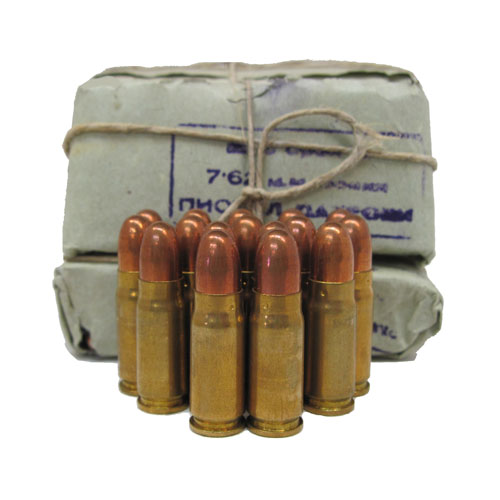
Readers of this site know that I am a fan of Soviet weapons. The USSR's first widely successful submachine gun was the PPSh-41. The PPSh-41 fired the lethal 7.62 Tokarev round at a blistering 900 rounds per minute and was fed from a 35 round stick or a 71 round drum magazine. It fired from an open bolt and had a selector switch which allowed semi-auto fire as well as full auto. In true Russian tradition, 7.62 x 25mm Tokarev cartridge was an improved copy of the German 7.63 Mauser round. The Soviets had adopted it as their issue pistol cartridge in 1933. Essentially, the Soviets took the 7.63 Mauser round and loaded it with more powder. This produced higher pressures and therefore greater velocity than the 7.63 Mauser. The Soviets had created a sort of mini-rifle cartridge, both in appearance and performance. The 7.62 x 25mm sported an ~85 gr FMJ bullet that traveled at roughly 1,450 feet per second out of a pistol. Penetration was excellent at these velocities; indeed, the standard loading of the 7.62 x 25mm is capable of defeating Level II body armor such as that found in modern Kevlar helmets and vests. When fired out of a submachine gun with a considerably longer barrel, velocities approached 1,700 fps. Translated to energy, that's about 520 foot-pounds of force, which is greater than that of the 9mm Luger or 45 Auto, and is just trailing the .357 Magnum. Impressive. Most impressive.

The 7.62 x 25mm Tokarev, as loaded by Soviet bloc nations. This appears to be Bulgarian surplus.

The PPSh-41 was a deadly piece of hardware, for sure. Built in typical Soviet fashion, it was cheap, rugged, reliable, and effective. A peasant conscript could be quickly trained to fire and maintain it, and it was relatively fast and easy to produce (which is a plus when your country is overrun by Nazis). The Soviets found the PPSh-41 to be so effective that they armed entire divisions with it. That's right. At a time when most infantry units were equipped with bolt-action rifles and a few crew-served machine guns, the Soviets fielded some infantry units with nothing but submachine guns. Crazy or genius? Well, when you consider the nature of fighting on the Eastern front, it makes sense. Engagement distance was considerably shorter in Russian cities, and when fighting against an entrenched German force in an urban environment, volume of fire mattered more than range and accuracy, and hit-and-fade operations were preferable to sustained engagements. The submachine gun was nearly perfect for this type of combat.


Russian partisans with their PPSh-41s. The PPSh-41 is also known as the "PaPaShaw" for obvious reasons.

The PPSh-41, despite its charms, wasn't perfect. Simple as it was, it did require skilled labor and a good bit of precious steel to make. Also concerning was its very high rate of fire. At 900 rounds per minute, your average Soviet conscript could dump a 71 round drum magazine in about five seconds, or a 35 round stick mag in about half that time...and the 71 rounders had a reputation for less than stellar reliability. In combat, your warfighters are only as effective as the logisticians who support them, and the PPSh-41 could burn through some Class V in a hurry. The Soviets needed a more economical sub-gun.

"I was thinking, we need a new submachine gun. Make me one by next Friday, or I'll kill your family."

Enter Soviet patriot Alexei Sudayev. In response to Mother Russia's requirement, he designed a weapon which some consider to be the finest submachine gun of WWII. Like the PPSh-41, Sudayev's sub-gun fired from an open bolt and was chambered for the potent 7.62 x 25mm Tokarev. It was made entirely of steel (primarily of sheet metal stampings, including the folding stock) yet required only half the metal of the PPSh-41. This simplified construction also reduced machining time by more than 50%, meaning that about two PPS-43s could be made for every PPSh-41. In addition to economy, the PPS-43  was lighter than the Papashaw, and the folding stock made it handier as well in close quarters. The rate of fire was reduced to ~600 rounds per minute vs. the PPSh-41's 900 rounds per minute. It dispensed with the selector switch of the Papashaw, being full-auto only. The PPS-43 was fed by a 35 round stick magazine. In a strange oversight for Soviet weaponry, it was incompatible with either the stick or the drum magazines for the PPSh-41. I've always thought this odd, considering the economical requirements that drove the development and fielding of the PPS-43. It seems to me that designing the new gun to accept the old gun's stick magazines at the very least would have been a no-brainer, but there it is. Go figure. Regardless, the PPS-43 was a great success, and in addition to the Soviet Union, it was produced in China and Poland after the war.


Soviet soldier with the PPS-43. The PPS-43 was developed, produced, and fielded during the Siege of Leningrad.

Major military powers no longer issue submachine guns to their general troops. What happened to it? Well, in the late 1940's a Soviet by the name of Mikhail Kalashnikov designed a weapon known today as the AK-47. Though most historians credit the German StG 44 with being the world's first assault rifle, it arrived too late on the battlefield in WWII and in too few numbers to make any real waves. The AK-47 had a much greater impact. Inspired by the StG 44 concept (if not design), the AK sounded the death knell for the submachine gun and changed the face of warfare. With the advent of the AK-47, the modern assault rifle had arrived, and with it the "convergence" I spoke about earlier. The AK-47 could do everything the submachine gun could do, and more. The AK-47 fired an intermediate rifle cartridges, making it more powerful than sub-guns but with comparable weight and recoil, and they could be made in multiple configurations with shorter barrels and folding stocks.  In traditional Soviet fasion, the AK was cheap, rugged, and effective, so it should come as no surprise that  it quickly became the standard issue weapon of the Soviet military. Most other militaries followed the Soviets' lead (some taking longer than others).

The sub-gun isn't totally dead, though. It's still an amazingly effective personal defense weapon, and as such, various submachine guns are employed by private security firms around the world. I saw more than a few contractors in Iraq armed with H&K MP5s, and I considered them well-armed men. Special forces units still use sub-guns as well, when the mission parameters call for them.


The Sturmgewehr 44, credited as the world's first assault rifle, and the beginning of the end for the submachine gun.

For a private citizen to acquire a functioning PPS-43 today requires a lot of cash and alot of red tape. But for much less money and hassle, you can own the next best thing. In 2010 a Polish company called Pioneer Arms began developing a semi-automatic version of the PPS-43 for commercial export. As I mentioned above, Poland had adopted the PPS-43 after WWII and produced it under license, so the country was no stranger to the design. Named the PPS-43C, these "new" guns were made from original PPS-43 parts with new manufactured upper receivers and a modified fire control system that converted the open bolt, full-auto only design to a closed bolt, semi-auto design that looks virtually identical to the original sub-gun. Additionally, the stock was "permanently" fixed in the folded configuration. These modifications mean that for BATF purposes, the gun is considered a semi-automatic pistol, which makes it legal to own for mortal men in most of the USA. I bought one from Southern Ohio Gun for the princely sum of $290. It came with a cleaning rod and two original 35 round magazines. That's a small price to pay for a piece of history, especially considering the red tape and extreme expense you'd have to go through to acquire an original PPS-43.


Top: PPS-43C; Bottom: Original PPS-43. Note the modifications to the lower receiver and firing mechanisms

The conversion is fairly well done, and while it's not the most reliable gun in my collection, it's tons of fun to shoot. Occasionally the gun will have a problem with the hard primers of military surplus 7.62 x 25mm ammo (likely due to the conversion, the original PPS-43 didn't have a firing pin, but a small nub on the bolt face that slammed into the primer), but commercial or reloaded ammo works great. Considering almost all of the surplus 7.62 x 25mm ammo has dried up, proper function with commercial stuff and reloads is a plus. Aiming the PPS-43C without the benefit of the folding stock is a little bit awkward, but shooting from the hip is fun and easy. There are gunsmiths who can reactivate the folding stock if you complete the proper BATF paperwork and pay the fee, which will turn your PPS-43C into a registered short barreled rifle (SBR). Considering this process costs as much as the PPS-43C itself and opens yourself up to government scrutiny, it's something I've not seriously considered, but it is an option.


The PPS-43C field strips just like the original. It's so easy, even a conscripted peasant could do it.

Though often overshadowed in history by the MP 40, the Thompson M1, and the PPSh-41 itself, the PPS-43 was a highly effective weapon. The Soviets liked it enough to replace the PPSh-41 with it, and given the advantages it offered over the Papashaw, it's easy to see why. China also licensed the design and produced their own version of the PPS-43 for its military. The Finns flat-out copied the design and used it as the basis of their own submachine gun, the M/44, which other than being chambered in 9mm Luger, was virtually identical to the Soviet PPS-43. The gun, like other Soviet firearms, has been found around the world in the hands of, shall we say, "paramilitary" groups, which is a testament to its design and function. The fact that any law-abiding American citizen can own a semi-auto version of this weapon for a few Benjamins is fantastic. There are other submachine gun conversions out there as well for fairly reasonable prices. If you enjoy historical weapons, check it out, and slay a few paper Nazis of your own for the Motherland. It's good for the soul.

Saturday, May 5, 2012

Les Fusils Grands: The French MAS-36 and MAS 49/56

Let’s do a quick experiment. When you hear the words “French rifle”, what comes to mind?


From top to bottom: Lebel Mle 1886, MAS-36, MAS-49, MAS-36/51, and MAS 49/56

Odds are, if you're an American, you likely snickered into your Budweiser, thought of a clunky, ineffective weapon, and mumbled something like “dropped once, never used”.

You couldn't be more wrong.

So, let me be clear. I like making fun of the French as much as any other red-blooded American. I mean, there’s just so much material out there to go after.  They’re rude. They have an annoying air of self-importance.  They don’t pronounce half of their consonants. Their men have funny little thin mustaches, their women don't shave their armpits, and all of them have a reputation for less than acceptable hygiene.  And worst of all...they think Jerry Lewis is funny.*


He's not. Well, maybe a little.


Given all this, the ignorant might be tempted to label the French as a bunch of wine-swilling, cheese-eating wimps. Well, I’m here to tell you: when it comes to French weaponry, and the French contribution to modern firearms in general, there is nothing to laugh at. Why? Here’s why:  A Frenchman is credited with the invention of smokeless gunpowder. It was France who, almost overnight, changed warfare forever by introducing the world’s first repeating bolt-action rifle to use this revolutionary gunpowder. Not content to rest on their laurels, it was a Frenchman who developed the pointed spitzer bullet, which further increased the range and lethality of these smokeless powder rifles. It was France who fielded the first reliable, light machine guns, it was a Frenchman who scored the first air-to-air kill with one of those machine guns, and it was France who gave birth to one of the most elite fighting units ever to walk planet Earth, the French Foreign Legion. You’ve heard of those guys, right? 


No, not those guys.


France doesn’t sound so wimpy all of the sudden, does it?
French weaponry has been overlooked in collectors’ circles. In my opinion, this is largely because collectors these days are infatuated with WWII, the last “great” and “just” war.  But whereas German and US weapons from this period are coveted, French firearms don’t get the respect they deserve for some reason. Admittedly France doesn’t have a lot of glory in this war: Nazi Germany invaded, France fell in roughly 40 days, and yes, some Frenchmen either cooperated with the Nazis or in rare cases, outright welcomed them.

Well, I couldn't care less about that. A good rifle is a good rifle, regardless of who produced it, under what circumstances, and when. And the Manufacture d'armes de Saint-Étienne (MAS) Modèle 36 is a good rifle.  Developed in the 1930s to replace the aging Lebel and Berthier rifles (the Lebel being the first repeating bolt action rifle to fire smokeless powder cartridges), it was (as its model number indicates), adopted by France in 1936. The MAS-36 fired a modern, rimless cartridge known as the 7.5 x 54mm French, which boasted a .30 caliber, 139 gr FMJ bullet moving at about 2,700 feet per second. That's approaching .308 Winchester level ballistics, so the 7.5 x 54mm is no slouch. The cartridge was already in use in France's main light machine gun, so standardizing the new battle rifle on this cartridge simplified logistics.

The 7.5 x 54mm French is a fairly standard looking round with decent performance.

While it may not win any beauty contests, the MAS-36 is a strong, simple, and well-made rifle. Its slab-sided receiver housed a Mauser style, double column, five round magazine. The sturdy bolt had dual rear locking lugs and a handle that was both bent down and angled forward. This looks a little awkward, but in practice allows a rifleman to manipulate the action quite easily.
My MAS-36, arsenal refurbished to like-new condition, and a fine shooter.

The rear sight was an aperture (peep) ramp sight that was adjustable for elevation from 200 to 1200 meters; the front sight a rather thick trapezoid shaped affair. The rear sight was adjustable for windage as well, but it involved replacing the aperture with another one that was slightly offset. I have read that the 'N' on the sight below indicates this aperture is dead center, but I am not sure if that is true.


Here you can see the rear sight and the position of the bolt quite well.

The 23" barrel was slightly countersunk which protected the crown, always a good idea. Underneath that barrel was a tube which stored a lightweight, but wicked-looking spike bayonet. A soldier could pull the bayonet out, invert it, and fix it into place in a couple of seconds. When it was no longer needed, it stayed stored safely with the rifle. I always thought this was a neat feature, as it was both economical (no need for leather frogs or separate scabbards) and practical. This also meant that no part of the bayonet was touching the barrel, so barrel harmonics are unaffected when firing with the bayonet.

The MAS-36 didn't see much action during WWII, but it continued to be produced into the 1950s. More than a few saw service in a land halfway around the world known as Indochina following WWII. The light weight, ruggedness, and simplicity of the MAS-36 made it a fine rifle in the harsh, jungle environment of Vietnam, but the face of warfare was changing. To be blunt, the days of the bolt-action battle rifle were over, and as such, the MAS-36 was getting rather long in the tooth. The other Western powers, and indeed even the Soviets, had either developed or fielded semi-automatic rifles during the 30's and 40's, and by the mid 1950s, the bolt action had been relegated to rear-guard service in all but the most impovershed nations.

French troops slogging through the mud with their trusty MAS-36s

The French had been working on their own semi for some time, and had even fielded a couple of early semi-autos here and there. But it wasn't until the MAS-49 (so designated due to the year of its adoption) that they really had a viable semi-automatic battle rifle. The MAS-49 kept the ugly, slab-sided looks of the 36, and added a detachable 10 round magazine and direct impingement gas system which provided the semi-automatic fire. The direct impingement method allowed for the desired operation without complex moving parts. A small hole in the barrel routed propellant gas into a tube, which in turn sent the gas flying backward into a recess in the rifle's bolt carrier. This simple, but sometimes controversial gas system (google it) would later be used by none other than Eugene Stoner in his M-16. The French manufactured about 21,000 MAS-49s and they saw significant use in the unpleasantness of the 1950s, to include Indochina, the Suez, and Algeria.


When fitted with optics, the MAS-49 served quite nicely in the designated marksman role.

Fine rifle though it was, there was some room for improvement. Those improvements were fielded as the MAS-49/56 in 1957. The 49/56 had some upgrades that came from lessons learned in combat. It was shorter and therefore lighter than the 49. The full stock of the 49 was replaced with a more modern affair. The 49/56 also sported a built-in grenade launcher that was compatible with NATO 22mm rifle grenades, and the rifle gained a compensator/flash hider as well. Many a Legionnaire carried a MAS 49/56, ready to do his duty to protect France and her interests.


French Legionnaires, AKA Bad Mother F*ckers. The one in the middle is armed with a MAS-49/56

Over a quarter million MAS-49/56 rifles were made until production ceased in the late 1970s, at which point France grudgingly adopted the sometimes hated, often debated, 5.56mm caliber for its main battle rifles like its Western allies.I am the proud owner of both the MAS-36 and MAS-49/56. My rifles were arsenal refinished by the French and placed in storage until they were eventually imported into the United States some time ago. They are in like-new condition with beautiful bores. Both rifles were relatively common, and cheap, a mere 15-20 years ago. That is no longer the case. MAS-36s go for north of $300, and rearsenaled MAS-49/56s go for roughly twice that. I paid current market prices for both of mine and consider them bargains. My MAS-36 came with a nice French sling, and the 49/56 came with four magazines, a sling, a bayonet with scabbard, a butt stock pad for firing grenades (just in case, you know) a few spare parts, and various leather pouches and tools.


My re-arsenaled MAS-49/56.

I consider the MAS-49/56 to be the epitome of the French battle rifle, and as such, one of the finest battle rifles ever produced by any country. And yes, I mean ever, even to this day. Call me a heretic, but if I had to go to war (again) and I was given the choice, I'd take a 49/56 over a M1 Garand, a M-14, an AKM variant, or an M-16. Nope, I wouldn't think twice about picking it over one of the ubiquitous M4 carbine clones everyone drools over these days. The MAS-49/56 is light, rugged, fires a potent cartridge, and has littIe felt recoil (thanks in part to the excellent compensator), especially with handloads. The ten round detachable magazine is quite sufficient, and the lack of full-auto fire is a feature, not a detriment in my opinion. The direct impingement gas system on the 49/56 never earned the bad reputation that the early M-16s did; in fact 49/56's have been known to function just fine dirty or even filthy, and given the corrosively primed ammo that was used back in the day, that's saying something.  When you do choose to clean it, it's easy to field strip and there's no star chamber to drive you nuts (I'm looking at you, Eugene Stoner) or gas piston to fiddle with (and you, Mikhail Kalishnikov).

If there is one flaw with the MAS-49/56 as a SHTFG (that's "shit hits the fan gun"), it is that it is chambered for an uncommon cartridge. In the event of a Zombie Apocolypse, ammo would be in short supply. From what I've read, the French experimented with MAS-49/56s in 7.62 NATO, but for one reason or another these never progressed beyond the test phase. When Century Arms International began importing 49/56s years ago, they converted a good many to ".308 Winchester" in an attempt to make the rifle less weird and more attractive to the American shooter. Reports vary widely on these conversions, ranging from "works fine" to "worst piece of crap I've ever shot". Mine is in the original 7.5 x 54 French chambering, and I wouldn't have it any other way. The 7.5 x 54 is an easy cartridge to reload, as it takes standard .308" bullets. Prvi Partizan makes a very nice factory load at reasonable prices, and the brass is reloadable.

For those who do reload, the MAS-49/56 has a reputation for slam-firing due to the design of its firing pin. While this might impress your friends at the range, the BATFE frowns on such things, so it's recommended that you use hard, mil-spec primers. For what it's worth, I reload with CCI 200 Large Rifle Primers and have not had a slam-fire, but it doesn't hurt to use CCI 34 mil-spec primers. Did I mention that both the MAS-36 and MAS-49/56 are C&R eligible rifles? Because they are.

I could go on about how I feel about these rifles, but if you haven't changed your opinion at this point, I doubt you will.  In a lot of ways, the French are like the late, great Rodney Dangerfield: they don't get no respect. One shouldn't say the same for their rifles.

*Francophiles, if you're grinding your teeth about these obvious stereotypes...lighten up. They were jokes. Feel free to insert any cowboy/fatty/ignorant American jokes in their place if it makes you happy.

Sunday, April 15, 2012

Rifles of the Old World: The 1893 and 1895 Mausers

Modern firearms manufacturing is an amazing thing. Fancy processes like metal injection molding, investment casting, and computer numerical controlled machining have allowed manufacturers to mass-produce high quality firearms. High strength, space-age polymer materials have become all the rage, replacing parts that were previously made of expensive metal or wood. These manufacturing processes have helped keep prices relatively low, allowing even the most frugal customer access to hunting and self-defense weapons. Cheap, available, reliable, effective...yes, there’s much to be admired about these processes and materials.


Now that that’s out of the way, let me just say that most modern guns bore me to tears. Don't get me wrong: I am all for progress and advancing technology.  But, when I pick up a GLOCK (which is the correct way to spell it, with all caps), wonderful tool and reliable firearm though it is, I just can’t help but feel that it’s missing…..something. One hundred years ago, CNC machines didn’t exist, metal was forged rather than injection-molded, and the only ‘polymer’ on the scene was a very new, early type of brittle plastic called Bakelite.  Manufacturing a firearm meant the investment of an enormous number of man hours. Parts were laboriously made, hand-fitted, and finished.  There just wasn't another way of doing things back then.

Gun shops being bombarded with GLOCKs. I'm pretty sure this is how authorized resellers get their shipments.

The late 19th century and early 20th century was an exciting time in firearms development. The invention of smokeless gun powder, and the weapons and cartridges that used it were pivotal. The giant clouds of smoke that enveloped entire regiments and made command and control difficult disappeared, much to the relief of the generals.  More importantly, though, smokeless powder generated higher pressures, which meant increased velocity, which in turn meant a flatter trajectory and increased effective range. Instead of relying on large caliber, heavy projectiles moving at relatively slow speeds, smokeless powder allowed for the first “small bore” cartridges with lighter bullets moving upwards of 2,000 fps.   The Spaniards illustrated this advantage (along with others) in the battle of San Juan Hill, where a mere 760 soldiers inflicted 5:1 casualties against a force of 15,000 Americans armed with inferior weapons, including single shot blackpowder rifles and the obsolete-as-issued Krag-Jorgensen.  The Americans won a costly victory (thanks in part to Teddy Roosevelt and his Rough Riders) and learned an important lesson the hard way, but they learned it well…well enough that they decided to commission a new military rifle and cartridge. More on that in a later entry.

Teddy "Rough Rider" Roosevelt. Enough said.

Another astounding development was the bolt-action repeating rifle.  The 1893 Mauser rifles used by the Spaniards were arguably the finest infantry rifles of their day. The brainchild of Paul Mauser, the Model 1893 sported a double column, internal five round magazine. Unlike previous Mauser designs, this double column magazine was flush with the bottom of the rifle, which contributed to sleek lines and easy handling. The two-piece bolt and non-rotating claw extractor allowed controlled feeding (the extractor maintained positive control of the cartridge through the chambering, firing, and unloading process, a feature that improved reliability). A guide was machined into the top of the receiver that allowed the entire magazine to be reloaded in a second with five round stripper clips, a significant advantage over the Americans' Krags.


Like so.

The action cocked on closing and was as slick as goose shit.  These features allowed a decently-trained soldier to fire 40 rounds of aimed fire per minute without breaking a sweat.  Except for maybe in the hot, humid swamps of Cuba.


Spanish soldiers as depicted in the film "Rough Riders" with their Mauser rifles

The 1893 Mauser fired a new, smokeless, rimless cartridge designated  as the 7 x 57mm Mauser (hereto known as the 7mm Mauser). That’s right, folks. Paul Mauser was designing 7mm cartridges and rifles a good 75 years or so before 7mm was the cool caliber to have.  Everything old is new again, eh? The original loading of for the 7mm Mauser was a 173 grain full metal jacket round nose bullet moving at about 2,300 fps. This may not sound too impressive today, but in the late 19th century, it was the bee’s knees.  Renowned hunter W.D.M Bell  killed 1,011 elephants with this loading (all headshots), which illustrates the accuracy and penetration of the round. The 7mm Mauser’s performance was even further improved with the invention of Spitzer bullets.


Modern loadings of the 7 x 57mm Mauser (left) and the .30-06 (right), both inspired by the 8mm Mauser.

Spain contracted for 200,000 of these wonderful rifles from Germany, and soon after began producing additional rifles via license in Spain. They liked the rifle and cartridge so much, they continued to make it until 1943. The newly independent countries of South America saw the appeal of the rifle and cartridge as well. Brazil and Chile both ordered variations of the 1893 type rifle.  The Chilean version was known as the Modelo 1895, and sported a few minor differences from the 1893, not the least of which was the addition of a “safety lug” which supposedly prevented the bolt from going through a rifleman’s face in the event of a catastrophic failure due to an overpressure situation.


The 1895 Chilean Mauser, very similar to the 1893 Mauser in most respects


More than a few Modelo 1895s have appeared on the market in recent years, varying in condition from "near-mint" to "dragged through the Chilean highlands behind a mule cart". As I mentioned earlier, the craftsmanship on these rifles is something to be admired. Oil finished walnut stocks, nitre-blued small parts with acceptance marks, gorgeous rust-blued barrel and receiver, and a polished steel bolt left “in the white”. If you were to make a rifle today the way Deutsche Waffen und Munitionsfabriken and Ludwig Loewe made them in the 19th century, it would likely cost several thousand dollars.

Near mint examples go for north of $800, but you can get a beater for a couple hundred bucks. I was fortunate enough two years back to find an excellent example for about $350. Mine certainly isn’t a mint, unissued piece, but other than dings and dents in the stock, and finish wear on the buttplate, my rifle is in fantastic shape. The bore is bright and unblemished, the metal finish is intact, and the rifle has all matching serial numbers…with the exception of the cleaning rod. Given the human attention and hand-fitting that went into these rifles, numbering major parts made sense. Mismatching parts like bolts can result in chambering and headspace issues, which aren't good. As for cleaning rods…well, I am unsure why Mauser felt it was necessary to number something like that, but there you go. I'm not so much of a collector that I'll turn my nose up at a mismatched cleaning rod.

My 1895 Chilean Mauser. Thing of beauty.

Shooting the 1895 Mauser is like traveling back in time. The first thing you notice is how long it is. I am about 5’ 9”, and with the butt of the rifle on the ground, as would be if standing at attention with it, the muzzle of the rifle touches my armpit. The barrel alone is 29”. Back in the day, rifle manufacturers felt that very long barrels were needed to get the most performance out of their cartridges. They were mostly right. Longer barrels allowed powder to burn more completely and pressure to be maintained longer, which in turn delivered greater velocity. However, there is a point of diminishing returns, and with improved propellants and cartridge design, super long barrels aren’t needed. Regardless, the 1895 Mauser weighs less than 9 pounds, so though it's long, it's not unwieldy by any stretch of the imagination.

Unless you're a member of the Lollipop Guild, that is.

The next thing you might notice is the sights. Let’s just say if you have bad eyes, Mauser type rifles may not be for you. The rear sight is a V notch, and the front sight is a ^.  This can make precision shooting a bit tough, but remember, that’s not what this rifle was designed for. In addition to the sight picture, the Mauser 1895 is battlesight zeroed at 300 meters. As in, that’s the lowest elevation setting you can sight the rifle in for. This is another reflection of the common wisdom of the time and the way that battles were fought.  On the other hand, if you want to shoot at distances greater than 300 meters, no problem: the rear sight flips up 90 degrees and has a slider which goes all the way to a rather optimistic 2,000 meters.  

Two thousand meters. Yeah, good luck with that.

The 300 meter zero means that when shooting at 100 yards, you’re going to be hitting 10-12” high. I’ve read that soldiers of the day were trained to aim for the enemy’s belt buckle when shooting at less than 300 meters. This makes sense, given the location of the vitals and the uniforms of the day which would have provided that easy reference point. Since most paper targets don’t wear belts, though, you’ll have to eyeball the hold-under distance when shooting on the range. I also find it just a little humorous that 19th century soldiers were essentially trained to make crotch shots. But I digress.
I handload for every firearm I own, and the 1895 Mauser is no exception. Since these rifles are old friends, I treat mine gently, and feed it only minimum loads using data published in reputable manuals.  I have no doubt that it could handle full power loads, but I see no reason to shoot them and put additional wear on an antique rilfe. An added bonus to loading to minimum loads is reduced recoil. The 7mm Mauser is a gentle cartridge anyway, but light loads fired from that 29” barrel are downright pleasant to shoot. According to the books, my current load has a 140 grain FMJBT moving at around 2,200 fps, which is plenty fine for putting holes in paper.  And speaking of putting holes in paper, the 1895 does that quite well. Once you figure out the hold-under at 100 yards, you might be surprised what it can do. I’ve shot ~2.5” groups with mine on the bench, and I have a feeling it could do a bit better with the right shooter/powder/bullet combination.  Not bad for a 117 year old rifle.

You can see how it printed high, in the 8 ring at 100 yards.

One really cool thing about the 1895 Mauser is that almost all of them were made before 1899. This means, according to our friends at the BATF, that it’s not a technically a firearm (don’t tell the soldiers who were at San Juan Hill, they might not appreciate that). But yes, it’s true. Guns made before this arbitrary date are considered to be “antiques”, not regulated firearms, and therefore you don’t have to fill out any paperwork to own one. In fact, you can mail order one like you would anything else, and it will be shipped straight to your door. Another possible upside to this is that it is the last gun an overzealous government would ever try to confiscate, on account of they don't really consider it a firearm.  Just a thought.
When I pick up my 1895 Mauser, I think of all the hands it’s passed through in its 117 years, from the German craftsmen who manufactured it at the Ludwig Loewe factory in Berlin, to the Chilean soldiers who were issued it, and all the things it has seen and done in its travels. “If it could talk” is something you hear people say about old things, and I think it applies here. This rifle has been halfway around the world in a hundred years and has wound up in my hands. It’s a piece of living history that functions just as well today as it did the day it was uncrated in Chile. Call me a romantic, but there’s something about that you just can’t get with one of those ubiquitous, plastic, black guns you see at every shop you walk into. Thanks for that, Paul Mauser.


Truly one of the greatest firearms designers ever


Sunday, March 4, 2012

Cold War Warriors: The Pistolet Makarova

For some reason, Soviet firearms fascinate me. I own several. Maybe that’s because I grew up during the latter half of the Cold War, when Reagan and Gorbachev were household names and daily headlines. At any rate, one of the benefits of winning the Cold War is that we get to play with their guns. Soon after Communism fell, the former governments of the Iron Curtain realized they had a cash problem. They also realized they had several metric tons of weaponry that they, as our “new friends”, could unload on our markets. Which brings us to this month’s subject at hand: the Makarov pistol, or if you prefer in Russian, the Pistolet Makarova.
A PM in its natural habitat.

Sometime after WWII, the Soviet Union felt the need for a new sidearm. Through most of WWII and after, the standard pistols of the Soviet Army were the Tokarev TT-33 and the 1895 Nagant Revolver.  The Tokarev was a fine pistol in its own right, and fired an interesting cartridge (both of which I will discuss in due time), but it was getting a bit long in the tooth. Its basic design was similar (but not copied from) to the American Colt 1911 pistol. As for the 1895 Nagant…well, let’s just say it was obsolete the day it was invented, and again, I promise I’ll elaborate on that statement later (*update: it's later. Click the link for my take on the Nagant).


In Soviet Russia, pistol fires you!

There’s an old anecdote (almost certainly untrue, but poignant nonetheless) that illustrates a fundamental difference between the West and the USSR.  The story goes that during the Space Race of the 50s and 60s, NASA procured specially designed pens so our astronauts could write in zero gravity. These ‘space pens’ (which you can still buy) employed a patented pressurized ink cartridge which allowed them to write at any angle, and yes, even in zero gravity. Cool, right? Go 'Merica! Ingenuity and all that!
Well, the USSR obviously had a space program, too, and a need for a space-age writing instrument as well. So what was the Soviet solution? How did cosmonauts write in orbit without the benefit of the amazing American space pen?
They used one of these: 
Soviet Space-Age Pen. Lenin would be proud.

In the world of firearms, the Makarov PM is a pencil.  It has very few parts, and some perform multiple functions. For example, the magazine retention system and release is an extension of the hammer/trigger spring, which itself is just a curved piece of stamped metal .  The safety/decocker also holds the free-floating firing pin in place, and the slide stop does double duty as the ejector for spent casings. Fewer parts means both cheaper to make and more reliable since there’s less stuff that can break. It’s something that engineers these days seem to forget at times. Keeping in line with simplicity, the PM works using a blowback system, so there’s no complex lock-up or linkage with moving parts needed. 

See? Very few parts. Well, for a pistol, that is.

To recap, the PM was simple, which made it cheap, reliable, and rugged, so it’s not hard to understand why the Soviets adopted it in 1951. Along with the PM, the USSR adopted the 9 x 18mm Makarov cartridge, which sported a ~95 grain, .363 diameter round nose FMJ bullet that moved at 1,000 fps. This makes the 9x18mm a bit better than the .380 ACP which is so popular in pocket guns these days, and quite a bit less powerful than the 9mm Luger, which was what the majority of NATO used at the time. Except for the US, of course. 
Left: 9mm Luger. Right: 9 x 18mm Makarov.

My PM is of Bulgarian manufacture (the USSR, East Germany, and Bulgaria were the primary users of the PM) and was made in 1983. I bought it at a gun show in what appeared to be unissued condition with two, eight round magazines, two sets of grips (neither of which I use), and a holster with cleaning rod. I forget exactly what I paid for it, but Bulgarians go for around $275-$350 depending on condition. The guns, not the people.

My PM with custom wattle grips finished in red shellac, from www.marshalgrips.com


Shooting the PM is fun. It’s easily one of my favorite handguns. It feels good in the hand, points naturally, and is superbly accurate. Even with the small military sights, a decent shooter can get some respectable groups out of the PM, and if bouncing a can around on the berm is your cup of tea, the PM serves quite well there too. The PM’s trigger isn’t anything to brag about, it’s your standard two-stage military trigger with some take-up, but it breaks clean. The double action trigger actually isn’t that bad, it’s a bit heavy but fairly smooth. One thing I really like about the PM is that cleaning it is a breeze, thanks to its simple construction and chrome-lined barrel. I liked my PM so much, I ordered a set of custom grips from Marschal Grips, a company in Hungary. The Marschalkos do some fantastic work that’s well worth the somewhat lengthy turnaround time. The grips aren't cheap, but few things that are good, are.
Though this may be heresy, I prefer the PM to its Western counterpart, the Walther P1. Though the P1 is more powerful thanks to its 9mm Luger chambering and has better sights, the PM’s simplicity, natural pointability, and heft win me over. I admit, I shoot a lot better with the PM than I do the Walther, so the fun factor definitely tilts toward the PM there. All in all, the PM is another affordable way to own a piece of history, and no serious collection is complete without one. Besides, this guy seems to like his alot.
In the Russian Army, this is what passes for a smile.